
Kei Trucks from Japan: Verified Before They Ship
Source kei trucks from Japan with auction evidence, condition checks, export documentation and a buyer path matched to your destination. Mirai Trading helps you compare the vehicle first, then plan the shipment.
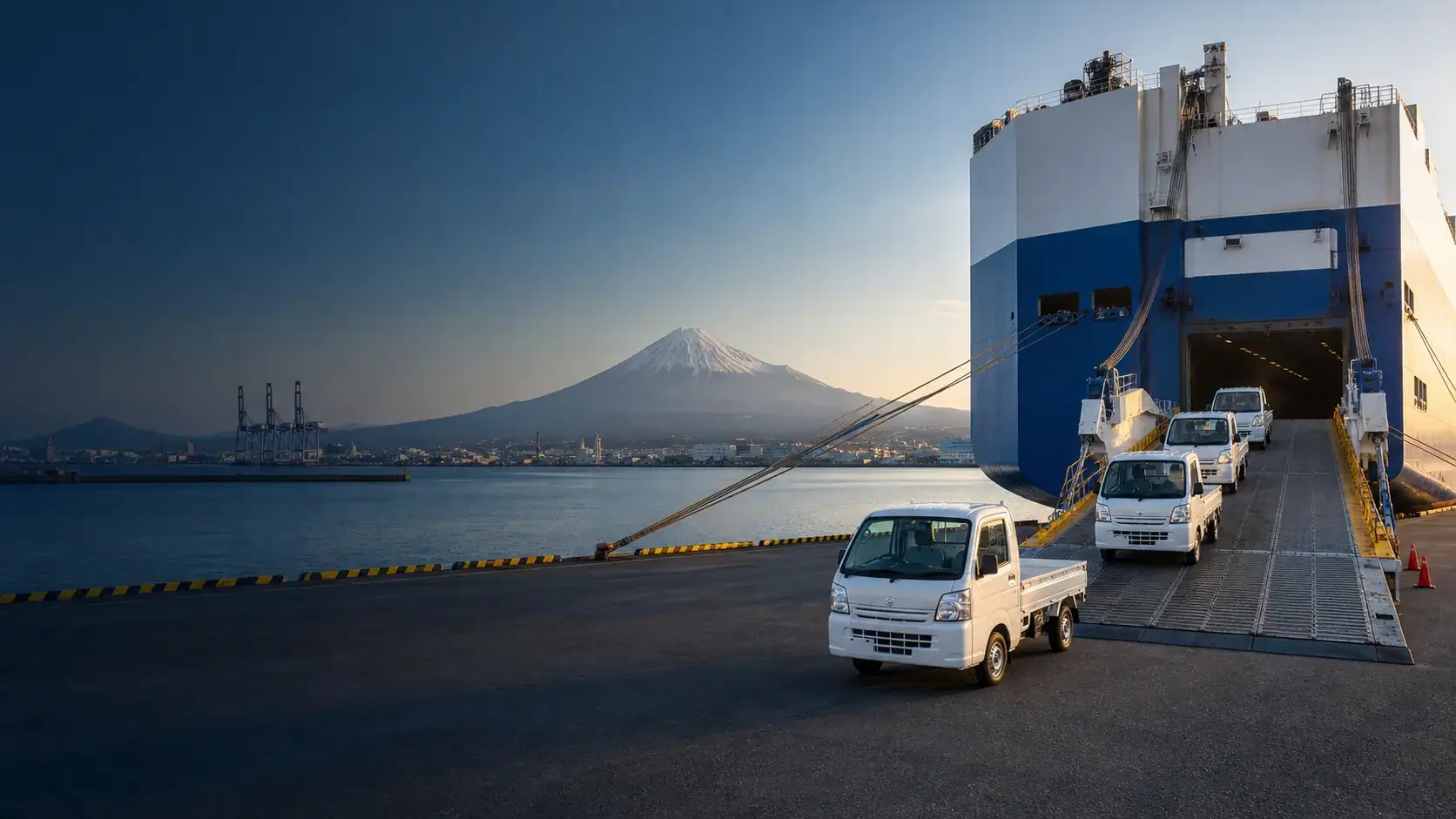
Federal 25-year import rule plus state-by-state registration guidance.
Carry, Acty, Hijet, Sambar and Minicab.
Condition and equipment must be checked vehicle by vehicle.
Mirai Trading LLC, Noda, Chiba.
A sourcing process built around evidence
The homepage sets the route. Detailed model pages, use-case hubs and country guides hold the depth, so buyers can move from discovery to the right next check without duplicated advice.
Vehicle discovery
Compare truck families, body styles and likely work fit before narrowing to a specific unit.
Auction evidence
Use available auction history and condition information to judge the individual vehicle, not its badge alone.
Condition checks
Review the chassis identity, fitted equipment and visible condition before relying on a seller description.
Export file
Match the invoice, export certificate and shipping documents to the purchased vehicle.
Shipping handoff
Coordinate the Japan-side shipment and give the buyer a clear handoff for destination-side steps.
Kei trucks from Japan, chosen around the job
These five families cover much of the buyer interest Mirai sees. Generation, chassis code, drivetrain, transmission and body equipment still need to be confirmed on the exact truck.
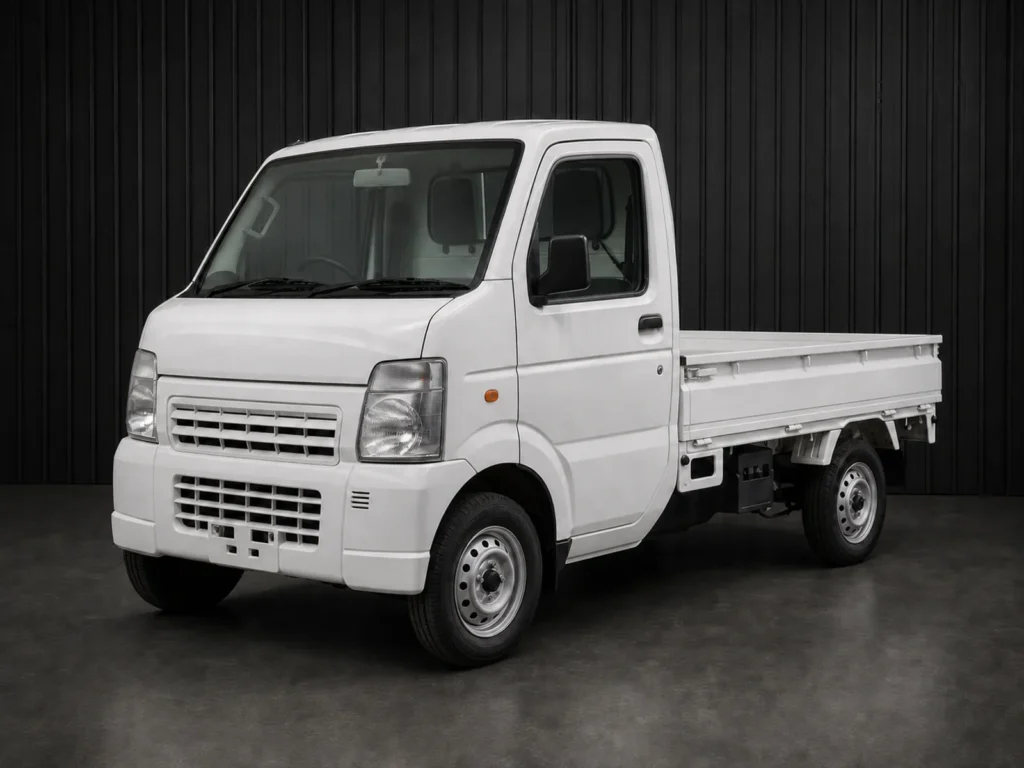
Suzuki Carry
A long-running choice for farms, property work and compact delivery duties.
- 2WD and 4WD configurations
- Flatbed, dump and specialist bodies
- Chassis-code guide available
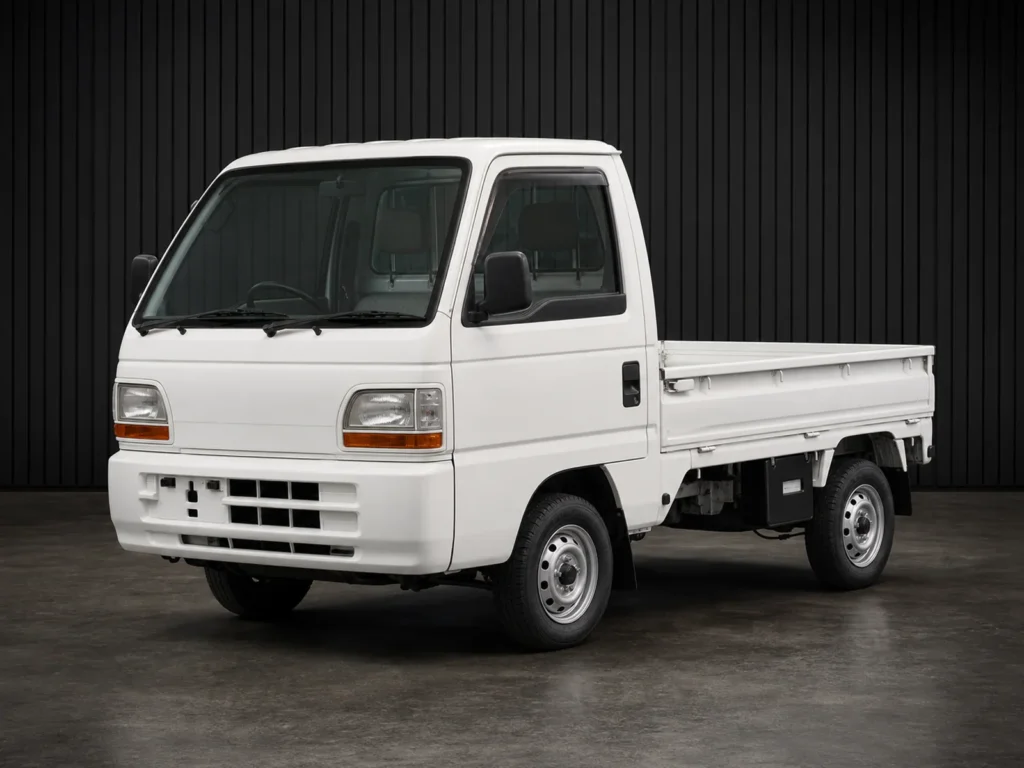
Honda Acty
A well-known legacy model with generation-specific drivetrain and trim differences.
- Rear-midship engine layout on key generations
- 2WD and 4WD variants
- Production ended in 2021
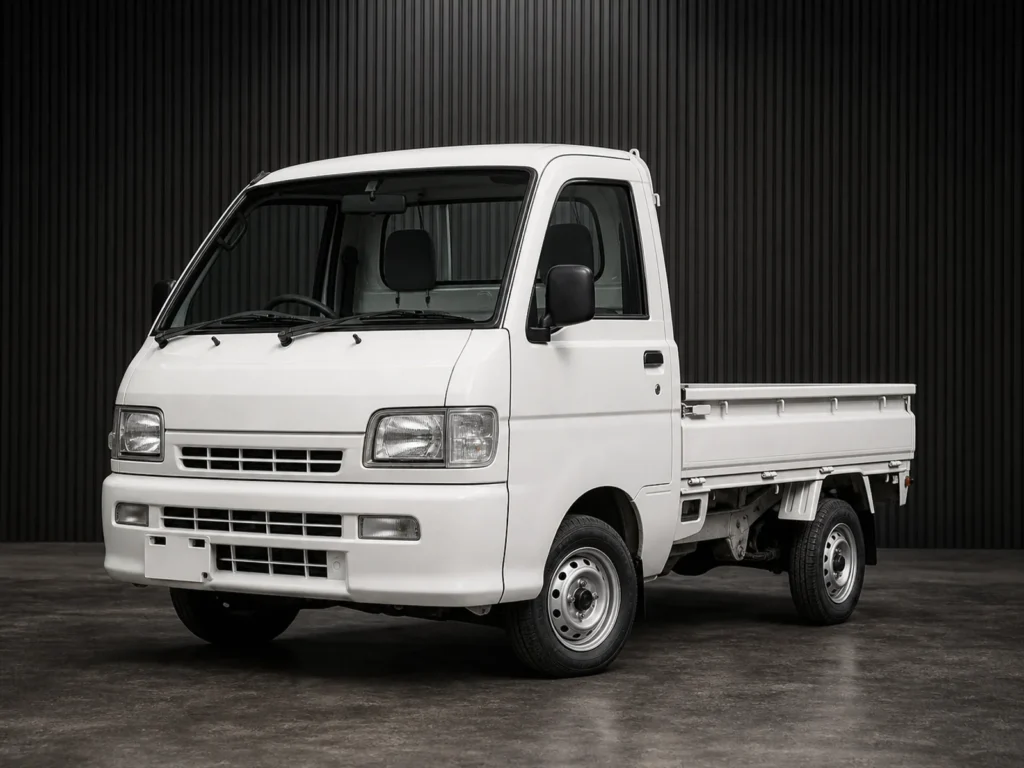
Daihatsu Hijet
A deep utility lineage with standard decks, dumps and newer comfort-oriented variants.
- Multiple cab and deck formats
- Manual and automatic availability varies
- Older and current-generation paths
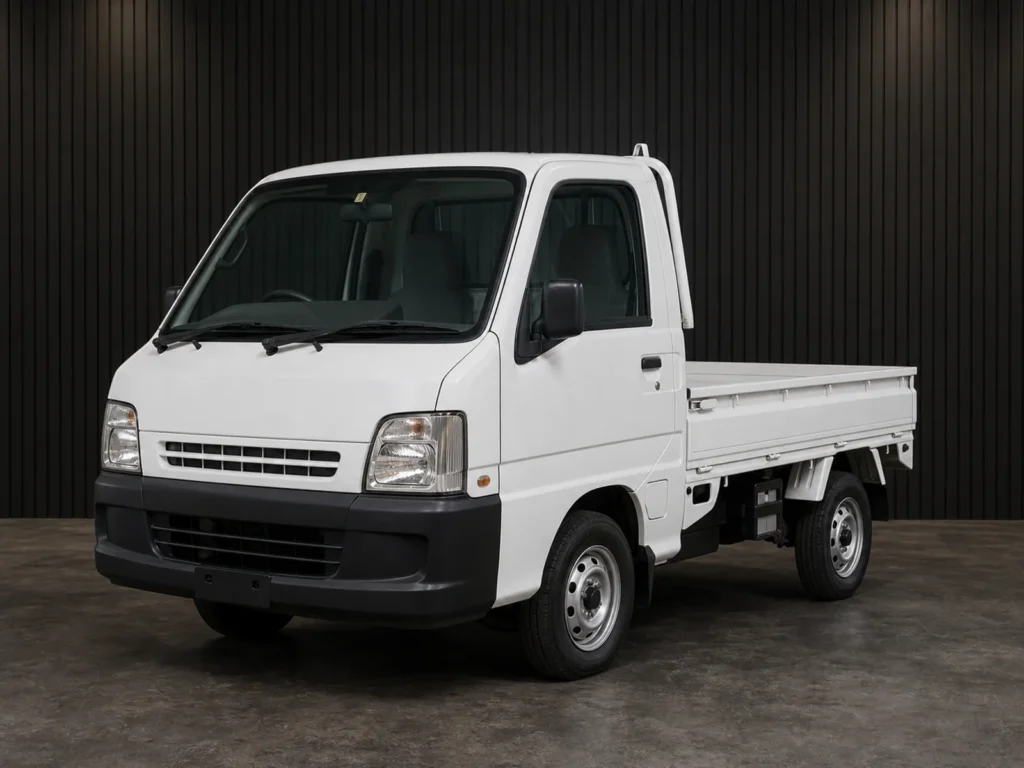
Subaru Sambar
Older Subaru-built generations attract buyers who value their distinctive layout and character.
- Generation identity matters
- 2WD and 4WD variants
- Current and legacy trucks differ materially
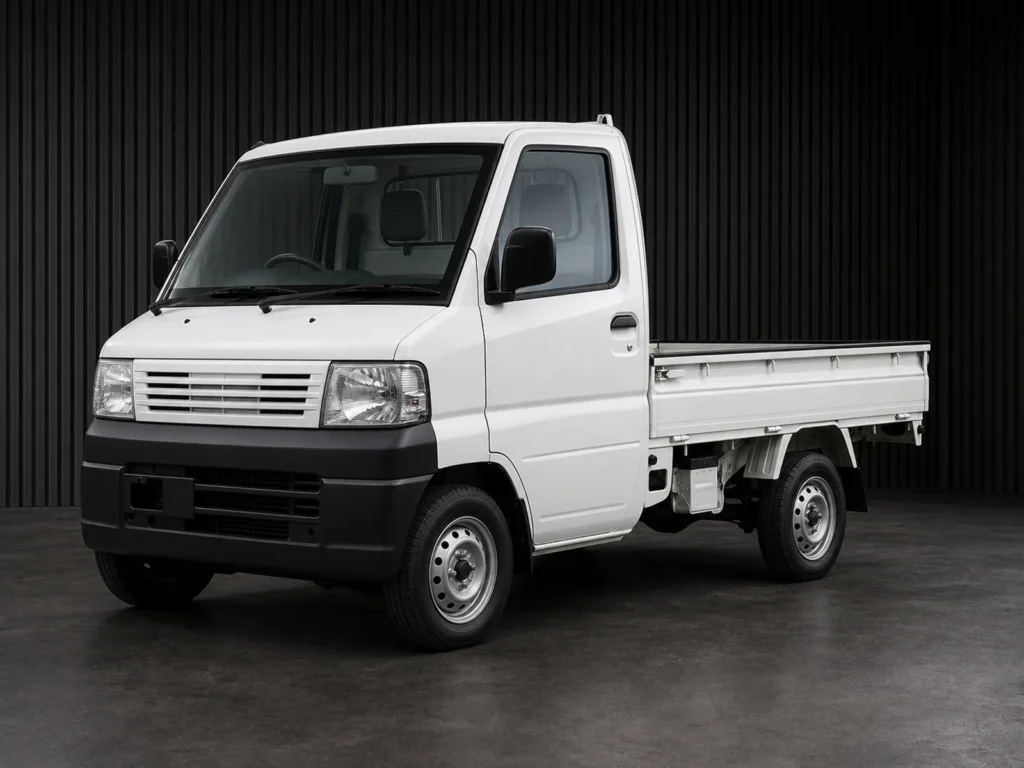
Mitsubishi Minicab
A practical truck family whose older and newer generations require careful code-level comparison.
- 2WD and 4WD configurations
- Flatbed and dump applications
- OEM lineage changes by generation
Start with purpose, then verify the code
A model name is only the first filter. Before purchase, confirm the chassis code, build date, engine, drivetrain, transmission, air conditioning, differential equipment and body conversion on the actual vehicle.
How to evaluate Japanese kei trucks for sale
Price makes sense only beside condition, specification and the full route to your destination. Mirai’s evidence-first workflow keeps those questions together.
Use transaction history as a benchmark, not a promise
Past auction results can help frame a budget by model, year, chassis and grade. They do not prove that a future truck will sell for the same amount or arrive in the same condition.
- Compare like-for-like chassis and years.
- Separate hammer price from fees, inland transport, freight and destination costs.
- Read the condition evidence before treating a low result as a bargain.
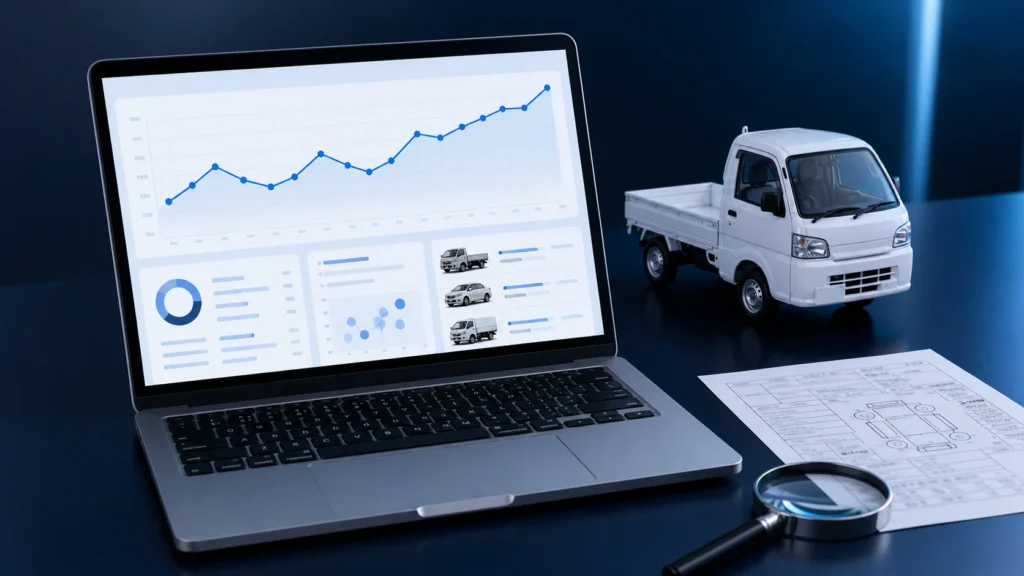
Price history is most useful when the comparison set matches the vehicle you are considering.
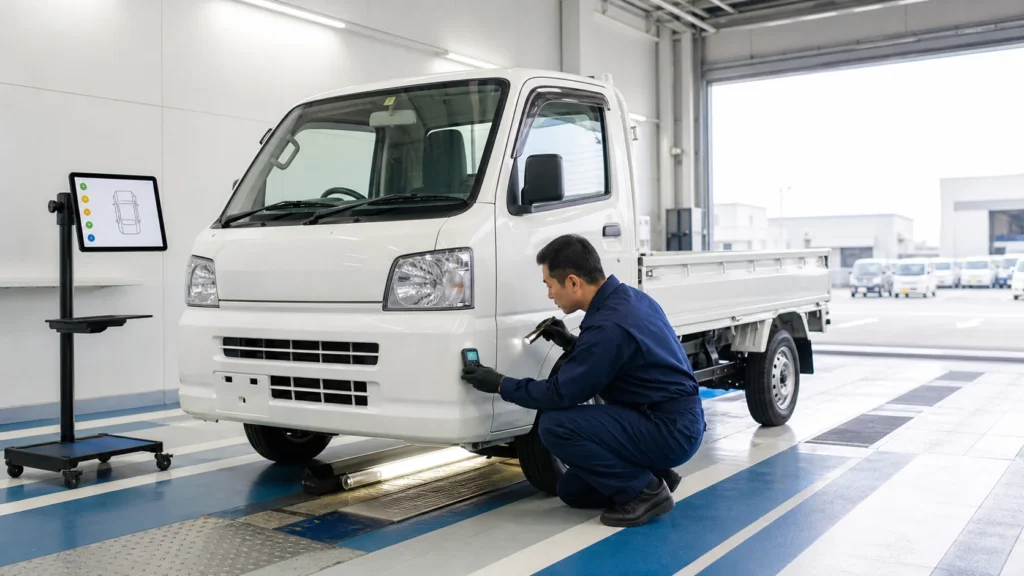
Condition and identity check
Ask for evidence that connects the chassis identity, visible condition and fitted equipment to the truck being quoted.
Ask what can be checked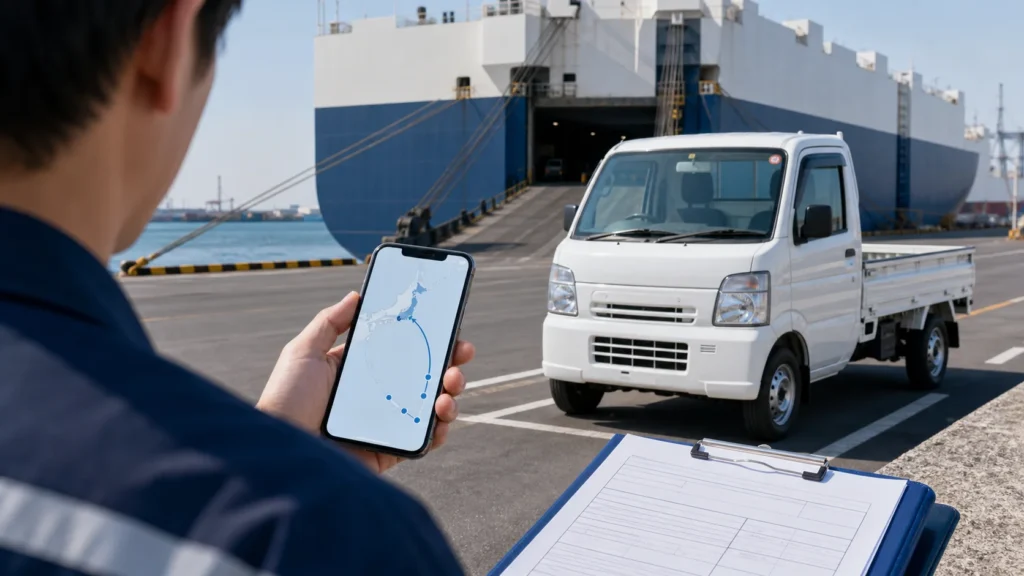
Export and shipping handoff
The Japan-side export file and booking need to identify the same vehicle. US clearance, federal compliance and state registration are handled at the destination.
See the USA import guideHow the Mirai sourcing path works
Four checkpoints keep the vehicle, evidence, payment and shipment in the right order.
Define the job and destination
Tell Mirai the intended use, body type, drivetrain preferences, budget and destination before a unit is shortlisted.
Review the exact vehicle
Compare chassis identity, available auction information, photos, condition notes and installed equipment.
Approve the purchase route
Confirm the commercial terms, Japan-side charges and what is or is not included before authorizing the purchase.
Prepare export and handoff
Coordinate Japan-side transport, export documentation and shipment, then follow the destination guide for local steps.
Explore kei vehicles by the work they need to do
Body equipment can matter more than the badge. These focused pages help buyers compare the right format before sourcing a specific unit.
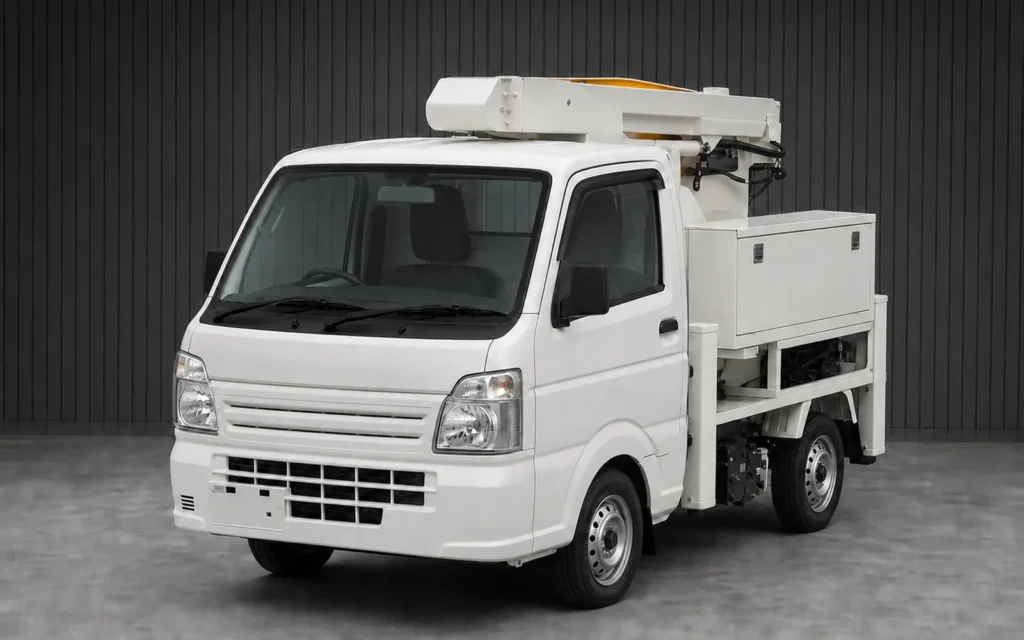
Bucket and aerial trucks
For elevated access, inspect the carrier truck and the working equipment as separate systems.
Explore kei bucket trucks →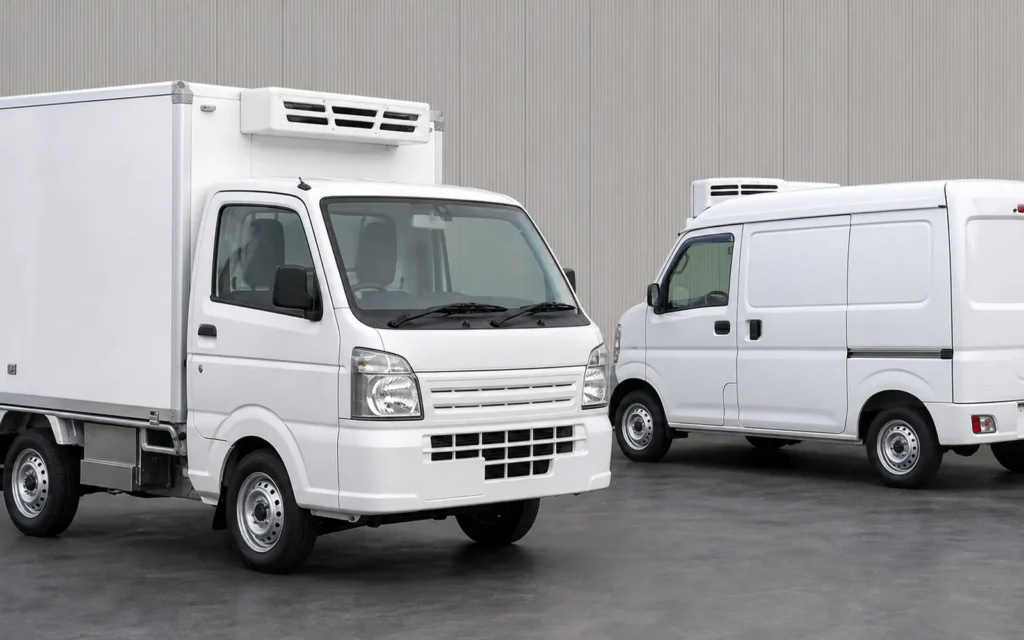
Refrigerated trucks
Compare box construction, refrigeration hardware, power source and temperature needs.
Explore refrigerated kei trucks →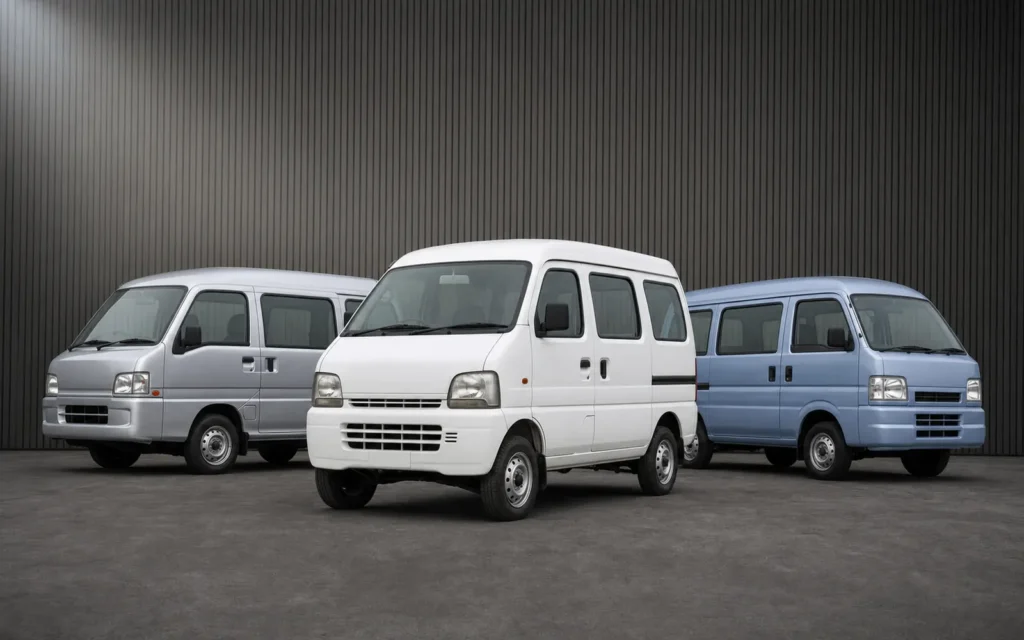
Cargo kei vans
Choose around payload needs, rear access, cabin layout and the intended delivery environment.
Explore cargo kei vans →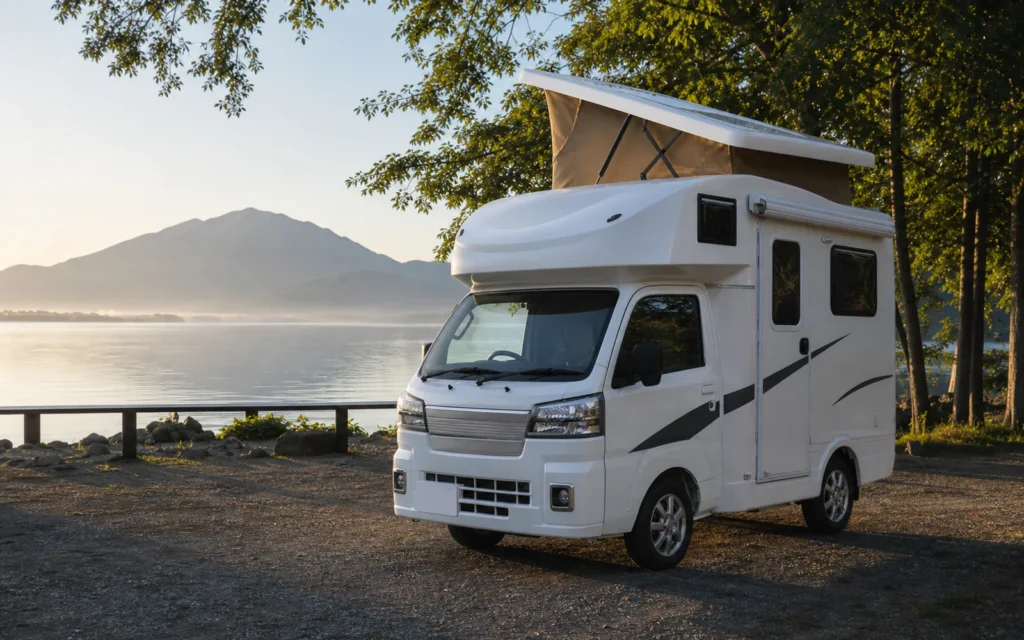
Kei camper vans
Review the base vehicle and camper conversion, including installed systems and usable space.
Explore kei camper vans →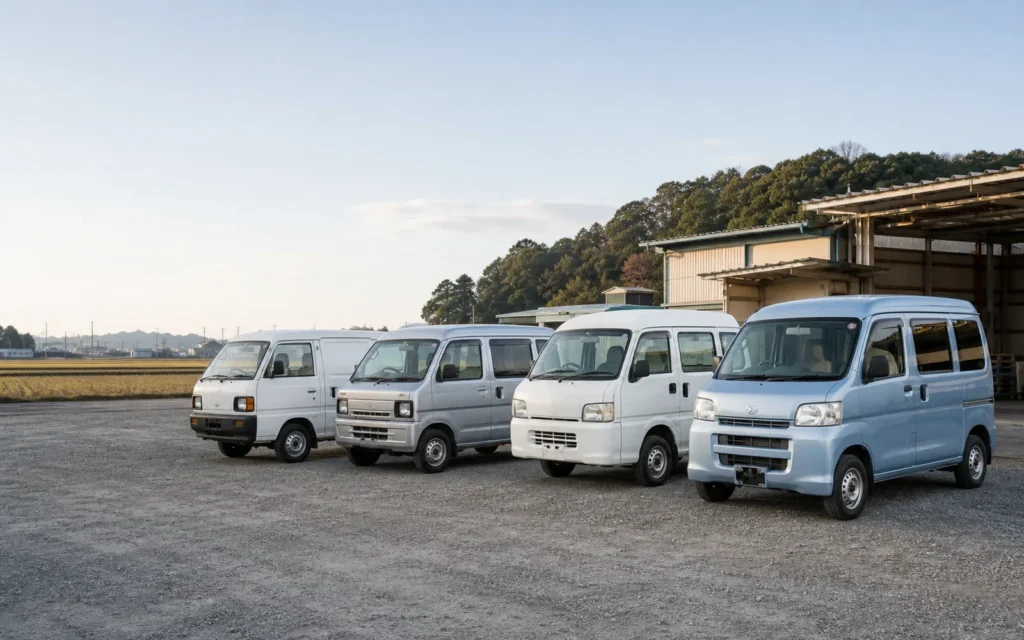
Popular kei vans
Compare passenger, cargo and lifestyle van families before narrowing the chassis and cabin layout.
Explore popular kei vans →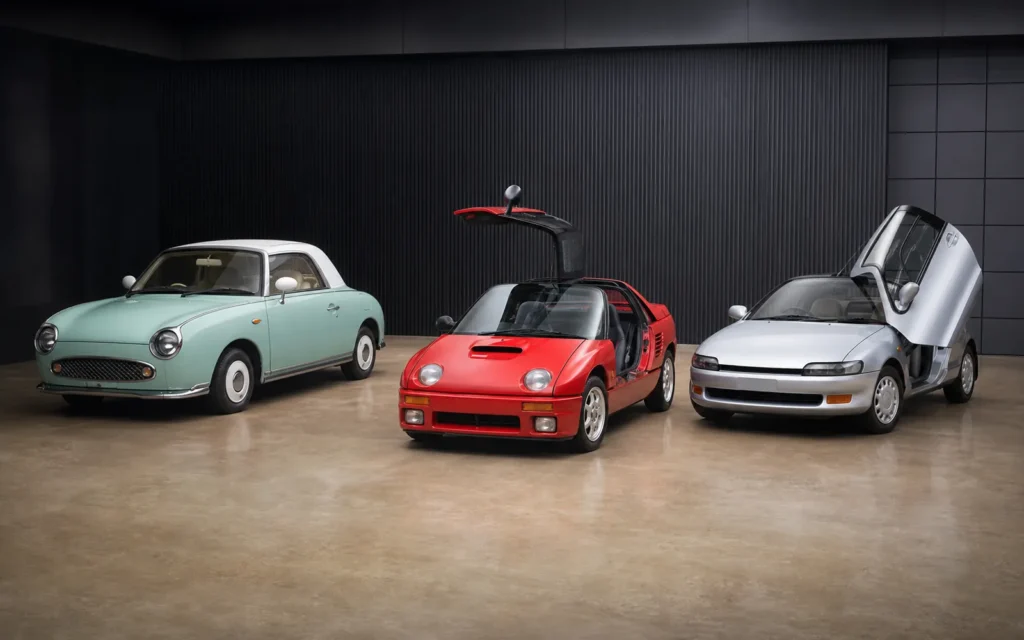
Speciality Japanese cars
Explore the ABC trio, Pike Factory designs and other distinctive Japanese enthusiast cars.
Explore speciality cars →Importing kei trucks to the United States
The exporting step starts in Japan; federal import eligibility and state title, registration and road-use rules are decided in the US. Use the guides below as a screening route, then confirm the exact vehicle with the relevant authority or specialist.
Federal import
Start with the federal 25-year import rule, exact manufacture date and EPA position before choosing a truck.
Open USA import guide →State legality & registration
On-road use is decided state by state (CARB, DMV titling and road rules). Check your state before you buy.
See state legality →Sourcing from Japan
We source and verify the exact vehicle at Japanese auctions, then handle the export file and shipping handoff.
How Mirai sources →| US step | First authority-level question | Local handoff | Mirai route |
|---|---|---|---|
| Federal entry | Is the exact manufacture date and 25-year federal entry basis documented? | EPA position and federal import paperwork | USA import guide |
| State title & registration | Does your state title, register and allow on-road use (e.g. CARB in California)? | State DMV title, registration and road-use rules | State legality guide |
This table routes readers to detailed guides; it is not an eligibility decision for an individual truck. Rules and evidence requirements can change.
Find your next Mirai page
Choose your buying goal. The result points you to the most useful next page for US buyers, without pretending to approve a vehicle for import.
This finder routes to research pages. Confirm the individual chassis and current US federal and state rules before purchase.
Your suggested route
Choose a goalWe will point you to a model, use-case or import-guide page, then you can ask Mirai to source the configuration.
The import guide is a screening aid. Final decisions belong to the relevant US authorities and registration bodies.
What buyers should be able to verify
These are practical evidence standards a buyer can ask Mirai to demonstrate before a purchase.
The quoted vehicle is identifiable
Chassis information, photos, equipment and commercial documents should refer to the same unit.
The scope is explicit
The buyer should know which Japan-side services, fees and documents are included and which destination-side tasks remain.
Uncertainty stays visible
Old auction results, photos and general guides inform a decision; they do not replace current inspection or authority confirmation.
Popular kei truck guides
Practical guidance on speed, towing, legality and lifestyle builds from the Mirai Trading blog.
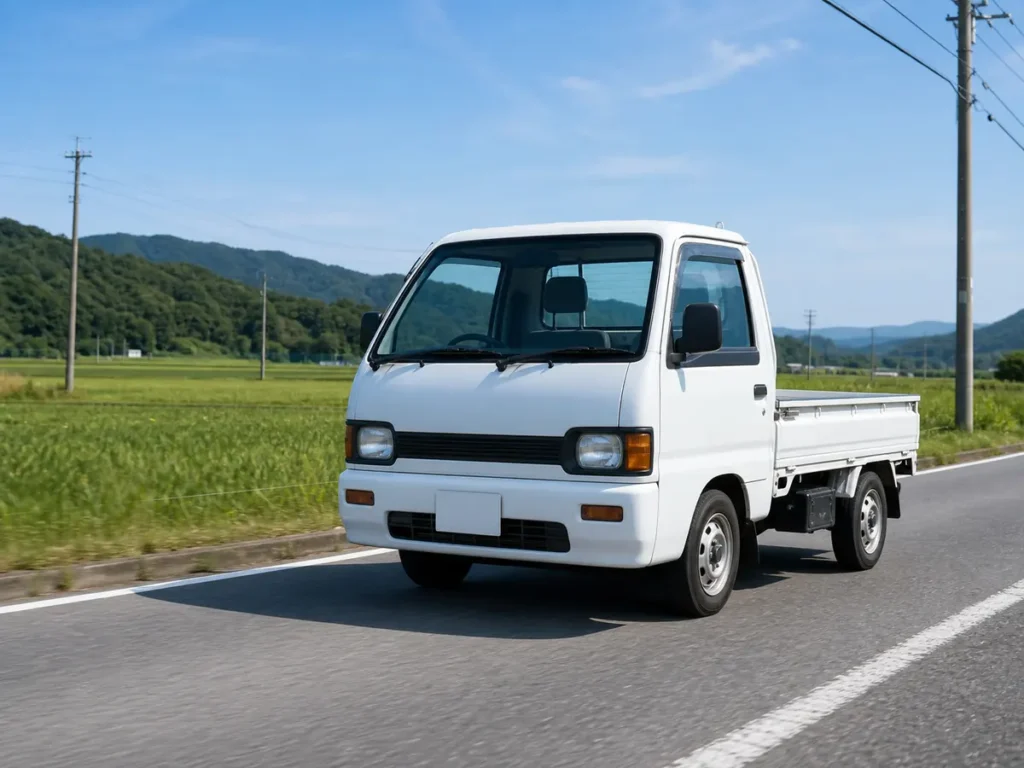
Kei Truck Top Speed: How Fast Do They Go?
Realistic mph by configuration, highway ability and what actually limits speed.
Read the guide →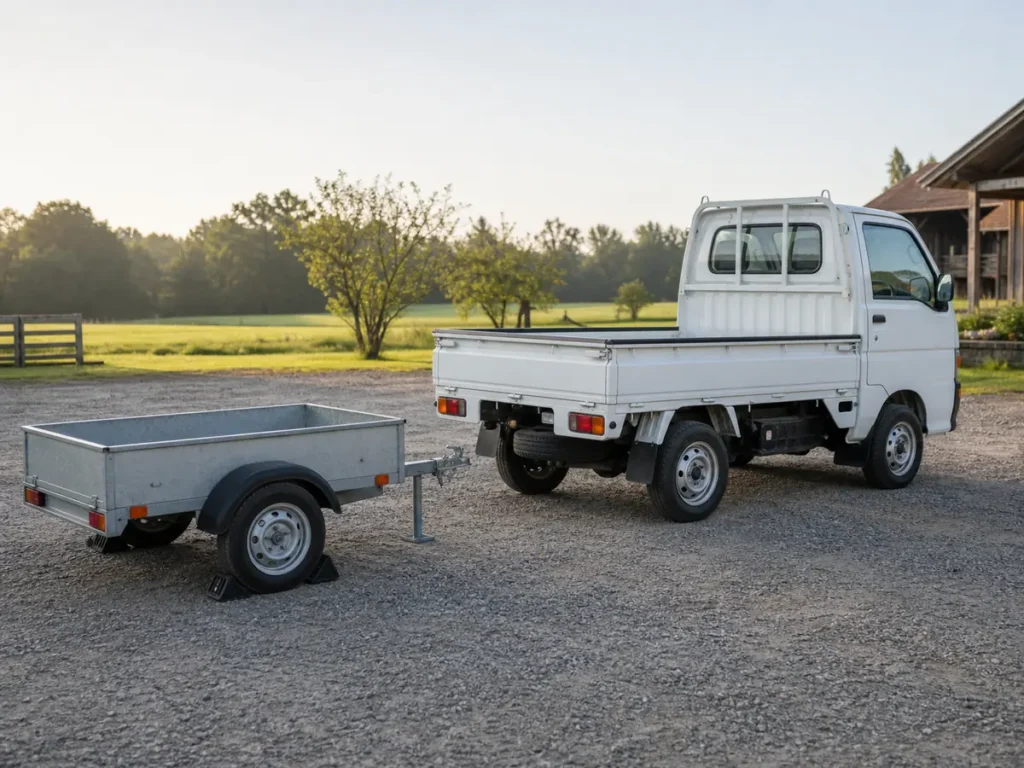
Kei Truck Towing Capacity
What a kei truck can safely tow, the ratings that matter and how to plan a trailer.
Read the guide →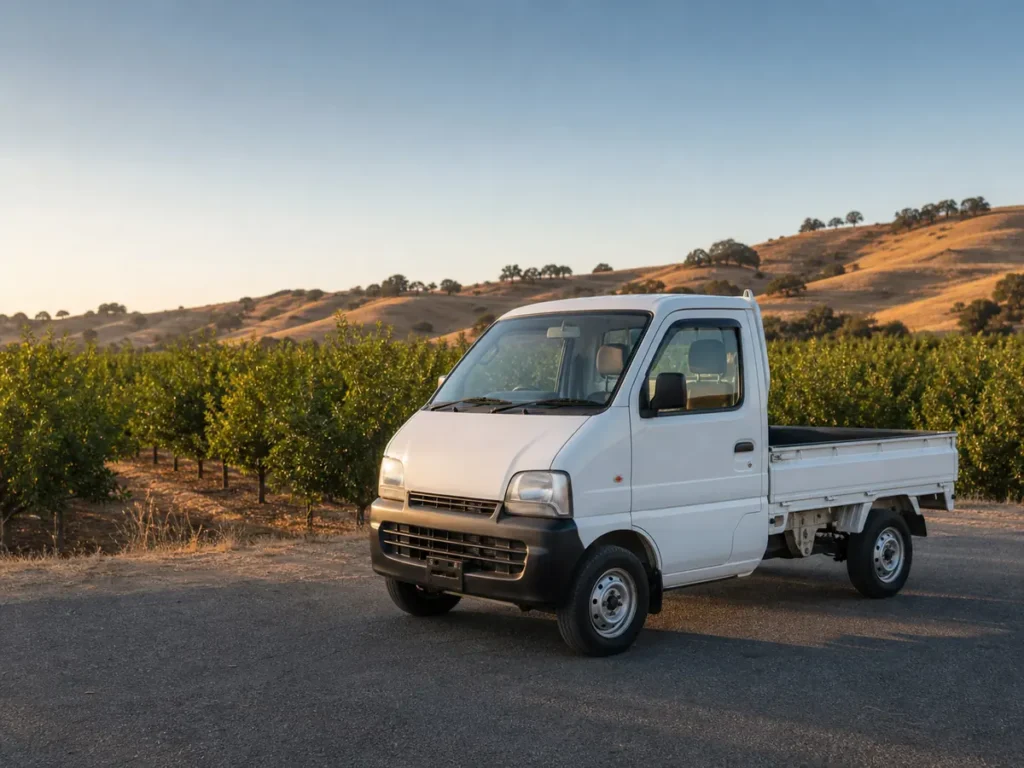
Are Kei Trucks Legal in California?
CARB, DMV, registration and where a kei truck can legally be driven in California.
Read the guide →Kei Camper Vans: Types & Buying Guide
Pop-tops, coachbuilt and removable shells — how to choose and verify a kei camper.
Read the guide →Kei truck sourcing questions
Direct answers about Mirai’s homepage routes, evidence workflow and Japan-side export service.
Does Mirai Trading sell kei trucks from Japan?
Mirai Trading sources and exports used Japanese vehicles, including kei trucks, from Japan. Availability changes, so the process begins with your job, destination, budget and required configuration rather than a guaranteed stock claim.
Which kei truck models can I research here?
The homepage links to detailed guides for the Suzuki Carry, Honda Acty, Daihatsu Hijet, Subaru Sambar and Mitsubishi Minicab, plus pages for cargo, refrigerated, aerial-work and camper configurations.
Can Mirai confirm a truck has four-wheel drive, air conditioning or a differential lock?
Those features must be confirmed on the individual vehicle. A model name or trim label alone is not enough; Mirai should match the chassis identity, photos, equipment evidence and seller or auction information before you rely on the specification.
Can I see auction information before buying?
When relevant auction information is available, it can help assess the vehicle’s reported condition and price context. The evidence available varies by unit, and historical results are not a guarantee of a future purchase price or condition.
Does Mirai’s quote include every destination cost?
Do not assume it does. The commercial quote should state what is included, such as the vehicle and specified Japan-side services, while destination duties, taxes, port charges, compliance work and registration may remain separate.
Will Mirai register the kei truck in my state?
Mirai coordinates the Japan-side sourcing and export scope agreed in the quote. US clearance, federal compliance, title and registration depend on your state and its DMV, so the homepage routes you to the USA import guide and your state’s legality guide.
Can a kei truck be imported into the United States?
Many kei trucks qualify under the federal 25-year import rule, but the exact manufacture date, EPA position and entry documents must be checked. State and local title, registration and road-use rules are separate, so use the USA guide and your state’s legality guide before choosing a truck.
Are kei trucks street legal in every US state?
No — on-road use is decided state by state. Some states register and allow kei trucks broadly; others (notably California via CARB) apply extra rules or restrictions. Check your specific state’s legality guide before you buy.
How do I ask Mirai to source a specific kei truck?
Send your US state, intended work, preferred model or body, year range, drivetrain, transmission, required equipment and budget through the contact page. Mirai can then look for a configuration that fits the request and explain the available evidence.
Primary sources & verification method
This homepage was checked as a routing and service page. Model-level claims are kept in the linked vehicle guides, while changing import rules are deferred to the dedicated USA import guide, state legality guides and current government sources.
- NHTSA — vehicle importation and certification FAQs for the federal 25-year United States entry framework.
- EPA — importing vehicles and engines for the federal emissions position on imported vehicles.
- California Air Resources Board (CARB) as an example of state-level rules that affect on-road use and registration.
- Mirai Trading — USA kei truck import guide for the federal-then-state screening route.
- Mirai Trading — popular kei trucks hub for model, year and chassis-code discovery.
Editorial and verification method
The Mirai Trading LLC editorial team reviewed this page against the linked model and US import guides, current official US federal and state requirements and the company’s confirmed business details. No named external specialist review is claimed; always confirm current government requirements and inspect the exact vehicle before purchase or shipment.
Start with the truck, the job and the destination
Tell Mirai what the vehicle needs to do and where it must go. The sourcing conversation can then focus on the right chassis, equipment, evidence and export route.